
Energy-Efficient Automation Sensors: A Complete Guide
In today’s technology-operated world, energy efficiency has become a major priority for industries, commercial buildings, and architect projects. Due to rise in energy costs, environmental issues, and the demand for smarter systems have increased automation to the head the need of this transformation are for energy-efficient automation sensors, which helps in monitor, control, and optimize energy usage over industrial environments.
Automation sensors allow systems to work smartly instead of continuously running at full capacity. From smart factories to smart buildings, these sensors play a major role in reducing the energy waste, improving operational efficiency, and supporting goals. This guide explains how automation sensors work, their applications, and why they are important for modern energy-saving systems.
What Are Energy-Efficient Automation Sensors?
Energy-efficient automation sensors are devices which is designed to detect changes such as motion, temperature, light, proximity, or position and turn them into signals for automated control systems. These sensors makes sure that an electrical and mechanical systems operate only when it is needed, majorly reducing energy consumption when not in use.
In automation, sensors are used to control lighting, HVAC systems, machinery, security systems, and access control. By replacing manual operation with smart sensing products, organizations get better energy management and lower operational costs.
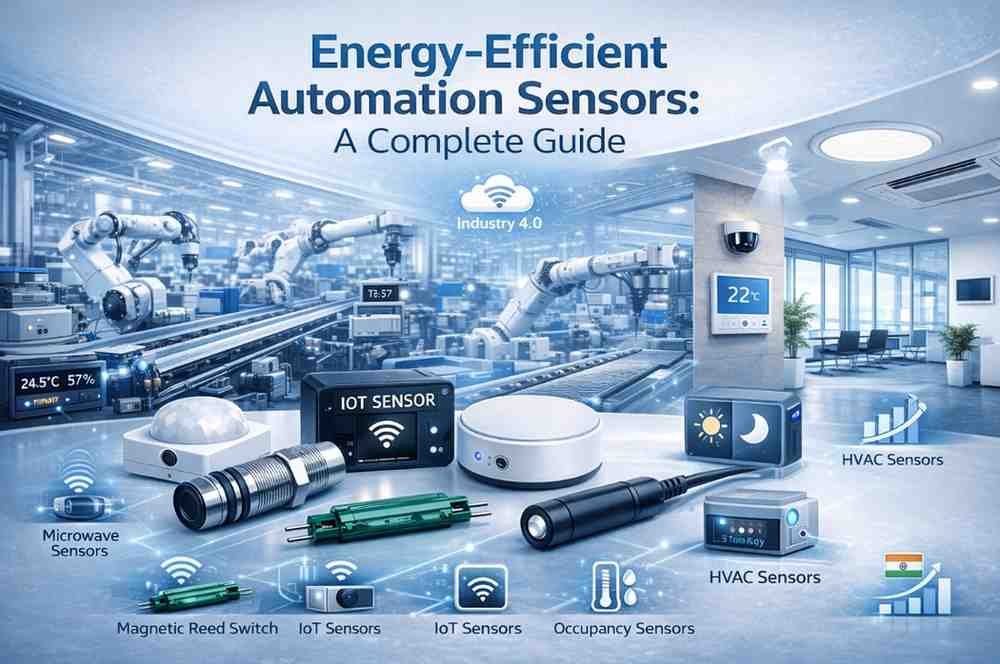
Common sensor types used in automation include motion sensors, occupancy sensors, proximity sensors, temperature sensors, light sensors, and magnetic sensing devices such as the magnetic reed switch sensor.
Importance of Automation Sensors in Industrial Applications
Industrial automation highly depends on sensors to maintain efficiency, accuracy, and safety. Modern manufacturing environments demand real-time monitoring and control, and sensors provide the data required to achieve this.
Role of Sensors in Industrial Energy Management
Automation sensors help industries in reducing their energy consumption by monitoring machine activity and adjusting operations accordingly. Equipment does not run uselessly, and systems shut down automatically during lazy periods. This approach not only saves energy but also expands their machine life.
One of the most major components in industrial automation is the Magnetic Switch, especially in applications where contactless sensing is required. These switches perform uniformly even in rough industrial environments.
Magnetic Reed Switch Sensor in Industrial Automation
The magnetic reed switch sensor is highly used in industrial automation for position and status detection. It contains sealed reed contacts that respond to a magnetic field, making it ideal for non-contact switching applications.
These sensors are regularly used to detect door positions, machine guards, valve states, and conveyor belt movement. Since there is no physical contact, wear and tear are minimal, resulting in long operational life and low maintenance requirements. Many industrial reed switch suppliers design these sensors specifically for demanding applications, make sure the durability, accuracy, and energy efficiency.
Magnetic Reed Switch for Automotive Industry
The automotive sector is increasingly accepting automation sensors to improve vehicle performance, safety, and energy efficiency. A magnetic reed switch for automotive applications is hugely used due to its compact size, long-lasting, and low power consumption.
These switches are used in door and hood sensing, seatbelt detection systems, gear position monitoring, and battery management systems—especially in electric and hybrid vehicles. Because they consume very minimum energy, and they are perfect for automotive designs focused on efficiency. As electric vehicles gaining popularity, the demand for long-lasting sensing solutions like magnetic reed switches continues to grow fastly.
Building Automation Sensors for Smart and Energy-Efficient Buildings
Building automation sensors which play an important role in creating comfortable, safe, and energy-efficient spaces. Smart buildings use sensors to automate lighting, climate control, and security systems.
Motion and Occupancy Sensors
PIR motion sensors and occupancy sensors detect human presence and automatically control lighting and also HVAC systems. Lights turn off when rooms are empty, and air conditioning adjusts based on occupancy levels. This automation majorly reduces the energy waste in offices, malls, hospitals, and residential complexes.
Day-Night Sensors and Lighting Automation
Day-night sensors, also known as photocells, it detects climate light levels and regulate artificial lighting according to the situation. When enough natural light is available, the artificial lighting is reduced or switched off. When combined with occupancy sensors, these systems form highly efficient automated lighting solutions that lowers the electricity consumption and improves visual comfort.
HVAC Automation and Environmental Sensors
Heating, ventilation, and air conditioning systems account for a large share of building energy usage. Automation sensors that measure temperature, humidity, and air quality help HVAC systems operate efficiently. Instead of running continuously, HVAC systems adjust output based on real-time environmental conditions. This improves indoor comfort while reducing energy bills and carbon emissions.
Modern Sensor Technologies Expanding Automation
Beyond basic motion and temperature sensors, modern technologies are increasing automation capabilities. Microwave sensors are ideal for large spaces such as warehouses and parking areas. Infrared sensors are hugely used in security and access control systems. Air curtain sensors helps in maintain indoor temperatures in commercial and industrial entrances. When it merge into a single system, these sensors create smart environments that respond firmly to changing conditions.
Energy Savings and Cost Reduction Through Automation
One of the strongest reasons to use automation sensors is their direct impact on cost reduction. Automated systems make sure that energy is used efficiently and only when it is required.
Lighting automation can reduce electricity consumption by up to 60% in low-traffic areas. In industrial environments, predictive maintenance authorize by sensors helps in prevent breakdowns, reduce downtime, and avoid costly repairs.
Over time, these savings provide a strong return on investment and support long-term maintainable goals.
Sensor Technology Market in India
India is experiencing growth in automation and energy-efficient technologies. Smart city projects, industrial modernization, and rising energy costs are getting demand for automation sensors.
Local manufacturers and industrial reed switch suppliers are playing an important role by providing reliable, cost-effective sensor solutions customized to Indian operating conditions. These suppliers support industries ranging from manufacturing and automotive to infrastructure and building automation.
Choosing the Right Automation Sensors
Selecting the right automation sensors are highly depends on the application needs, environmental conditions, and system similarity. Factors such as durability, sensing accuracy, power consumption, and ease of combination should be carefully evaluated.
For applications requiring non-contact operation and long service life, a Magnetic Switch or magnetic reed switch sensor is often an ideal solution. Partnering with an experienced manufacturers makes sure the long-lasting performance and technical support.
The Future of Energy-Efficient Automation Sensors
The future of automation lies in smartness, connected systems powered by sensors, IoT, and AI. Modern analytics and machine learning will enable predictive control, further reducing energy usage and improving system efficiency.
As sustainability becomes a global priority, automation sensors will continue to play an important role in smart industries, smart buildings, and electric mobility solutions.
Conclusion
Energy-efficient automation sensors are needed for modern industrial and building environments. They reduce energy consumption, improve operational efficiency, and support viable development.
Whether it is a magnetic reed switch for automotive, a magnetic reed switch sensor for industrial automation, or smart building solutions, investing in automation sensors today makes sure the long-term benefits. With revolution and reliable suppliers driving the market forward, automation sensors are shaping a smarter, greener future.